
Smart Silo Temperature & Humidity MonitoringComplete Warehouse Automation
From dangerous temperature spikes to damaging humidity, keep an eye on everything, moment to moment. Our wireless sensors continuously measure the temperature and humidity inside each silo, and instantly send an alert if levels move outside the safe range, preventing spoilage of grain and other stored products.
Why Choose Smart IoT Silo Monitoring?

With the advancement of technology in the fields of electronics and software, product condition monitoring devices for silos have been developed. These devices not only perform the necessary actions to maintain product quality in an intelligent manner, but also, through a connected platform with devices such as modems, can provide monitoring results over the Internet. This eliminates the need for the user to be physically present at the site, allowing remote monitoring, result analysis, and even the provision of solutions for further improving and optimizing this process based on the collected data over a specific period of time.
The SIMCS system has been developed for monitoring and controlling silo conditions and related parameters. By utilizing multiple sensors, a dual processor, various actuators, and multiple hardware communication protocols, this system can deliver performance based on international standards.
The system operation is described as follows: First, the parameters of temperature, humidity, and grain level are measured by the corresponding sensors, and this information is sent to the central control board. Then, if the system is set to automatic mode, the necessary actions for temperature control and grain movement are performed by the device according to the predefined settings.
If the device is operating in offline mode, the information is not only stored in the device memory but is also displayed and saved through Wi-Fi and Bluetooth in the related software installed on a smartphone or computer. Additionally, if any configuration changes are required, they can be easily applied through the same software.
Real-Time Inventory Visibility
View the exact fill level of silos and storage tanks from any device. No need to climb ladders or perform manual measurements; know the precise amount of feed, grains, or materials at any time.
Automatic Refill Detection
The system automatically records every refill event, including time, added quantity, and supplier information. Create complete operational reports without manual data entry.
Low Inventory Alerts
Set custom threshold levels for each tank and receive instant alerts via SMS, email, or application notifications when material levels decrease, ensuring critical supplies never run out.
Consumption Analysis
Track daily, weekly, and monthly consumption patterns. Predict reorder times and optimize purchasing processes based on real consumption data.
System Architecture
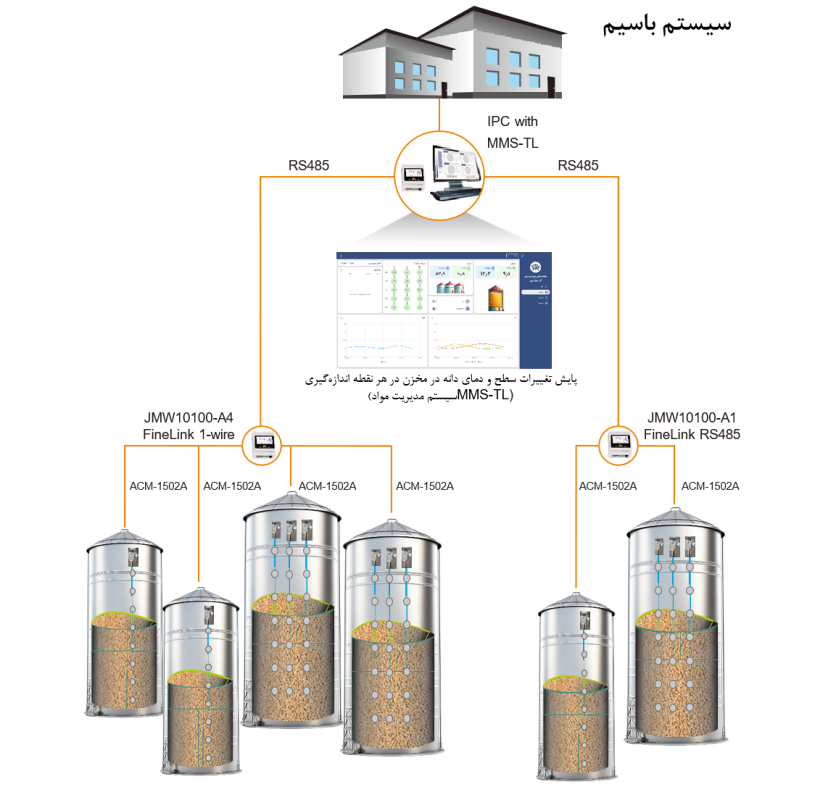
Level Measurement Technologies
Choose the best measurement technology based on your project requirements.
80 GHz Radar Level Sensors
High-precision non-contact measurement technology, ideal for silos, tanks, powders, and granular materials. Provides stable performance against dust, steam, temperature variations, and pressure changes.
- ✓ Measurement accuracy up to ±2 mm
- ✓ Measurement range up to 30 meters
- ✓ Reliable operation in dusty environments
- ✓ Suitable for grains, flour, cement, and animal feed
Load Cell-Based Weighing Systems
High-accuracy direct weight measurement for inventory management, industrial process control, liquid tanks, and verification of incoming and outgoing material quantities.
- ✓ Measurement accuracy up to ±0.1%
- ✓ Direct mass measurement
- ✓ Precise material delivery control
- ✓ Suitable for liquids and solid materials
Monitor Any Material and Any Tank
Flexible solutions for agriculture, livestock, and industrial operations
Animal Feed
Monitor animal feed silos in dairy farms, poultry farms, and livestock facilities. Track consumption for each animal group and automatically manage refill scheduling.
Grain Storage
Track grain levels in tanks and silos. Combine this system with temperature monitoring to identify spoilage risks and optimize storage conditions.
Liquid Tanks
Monitor water tanks, fuel storage, liquid fertilizers, and chemical containers. Analyze consumption levels and receive low-level alerts.
Industrial Materials
Cement, sand, fertilizers, and bulk materials. Integrate with ERP systems to automate inventory management and purchasing processes.
Complete Intelligence in Inventory Management
Powerful capabilities for managing all your storage assets
Refill Event Tracking
Automatically identify and record every delivery event with time, quantity, and calculated cost. Maintain a complete history for accounting and supplier verification.
Consumption Forecasting
AI-powered predictions indicate when your inventory levels will decrease. Plan purchases and schedule deliveries proactively based on historical consumption patterns.
Multi-Site Management
Monitor silos across multiple locations through a single dashboard. Compare consumption rates, consolidate reports, and control your entire inventory management process.
Technical Specifications
Industrial sensors with robust design for reliable performance
80 GHz Radar Sensor
- Measurement Range: 0.1 to 30 meters
- Accuracy: ±2 mm
- Beam Angle: 4 degrees
- Output: 4-20mA / RS485 Modbus
- Power Supply: 12-24V DC
- Protection Rating: IP67
- Operating Temperature Range: -40 to +80°C
Cloud Platform Features
- Real-time tank level monitoring
- Automatic refill detection
- Consumption analysis and forecasting
- Low-level alerts (Email, SMS, Push Notification)
- Data Export (CSV, Excel, PDF)
- REST API-based integration
- Multi-user access and role management
Choosing a Silo Level Monitoring System
Selecting the right silo level measurement system starts with understanding the material you store. For animal feed, grains, flour, and other powder and granular materials, 80 GHz radar level sensors are a practical and standard solution. These sensors perform non-contact measurement, can detect material levels through dusty environments, and are not affected by temperature changes or surrounding vapors. For liquids and applications where the delivered quantity needs to be verified by weight, load cell systems directly measure the mass.
The shape and structure of the tank are just as important as the material type. Tall and narrow silos require a focused 4-degree radar beam to prevent false reflections caused by signals hitting the walls. Short and wide tanks and open containers provide simpler measurement conditions. For monitoring grain levels across multiple silos and different structures, using one radar sensor for each silo that sends data to a central dashboard is an effective alternative to manual measurements and climbing ladders.
Regardless of which silo level measurement equipment you choose, the main value lies in continuous and real-time data: automatic refill event recording, low inventory alerts, and consumption trends that transform raw material level data into accurate decisions for restocking. The guide below compares radar, ultrasonic, load cell, and capacitive technologies side by side to help you select the most suitable sensor for your operating conditions.
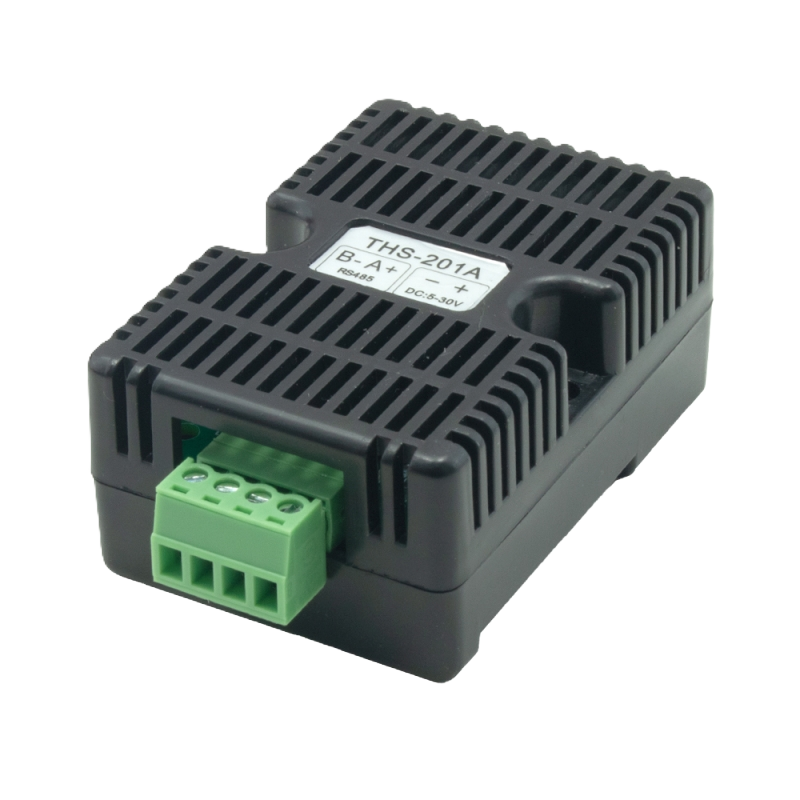
Humidity Sensor AHS-101
Description:
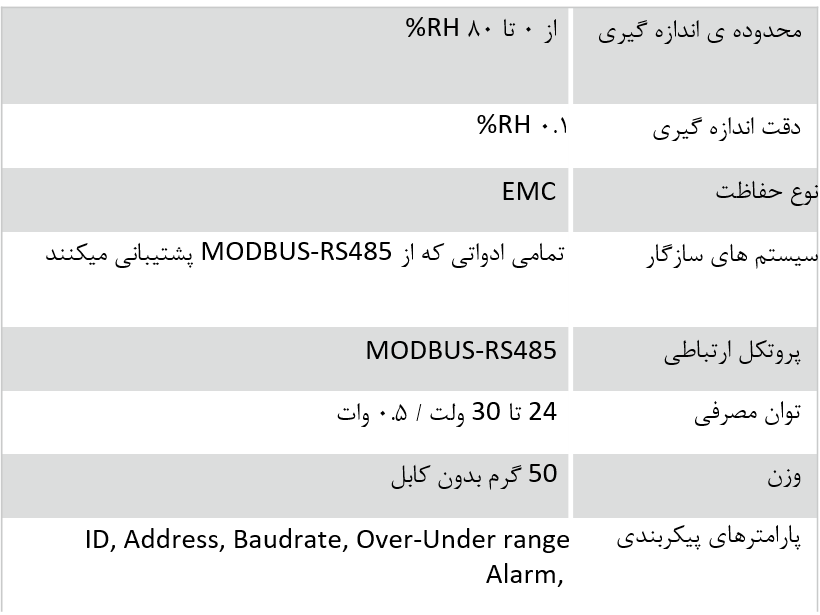
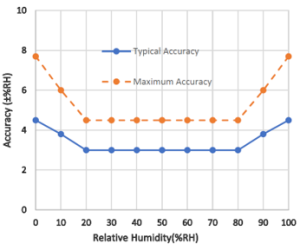
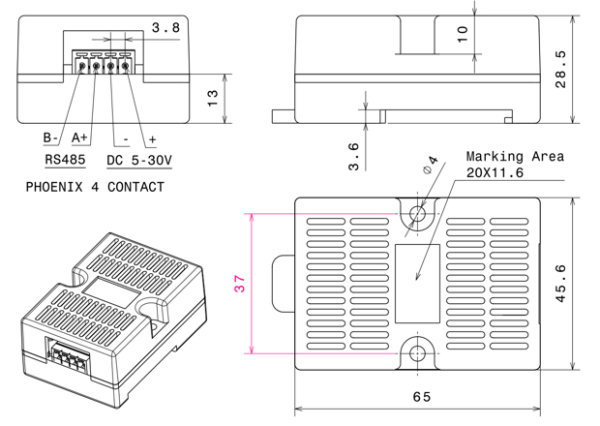
The AHS-101 Humidity Sensor includes a high-precision internal humidity measurement sensor with low power consumption. Due to its industrial-grade packaging standard for installation in industrial environments, this sensor supports the standard MODBUS-RS485 communication protocol to ensure compatibility with various industrial systems such as PLC and HMI.
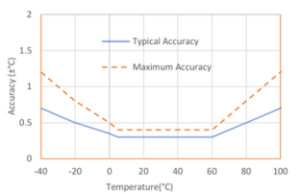
The humidity measurement range of this sensor is 0 to 80 %RH, with a measurement accuracy of 0.1 %RH. Easy configuration, practical settings, compact size, low energy consumption, and protection against electrostatic discharge and electromagnetic interference are among the other advantages of this sensor.
Silo Software
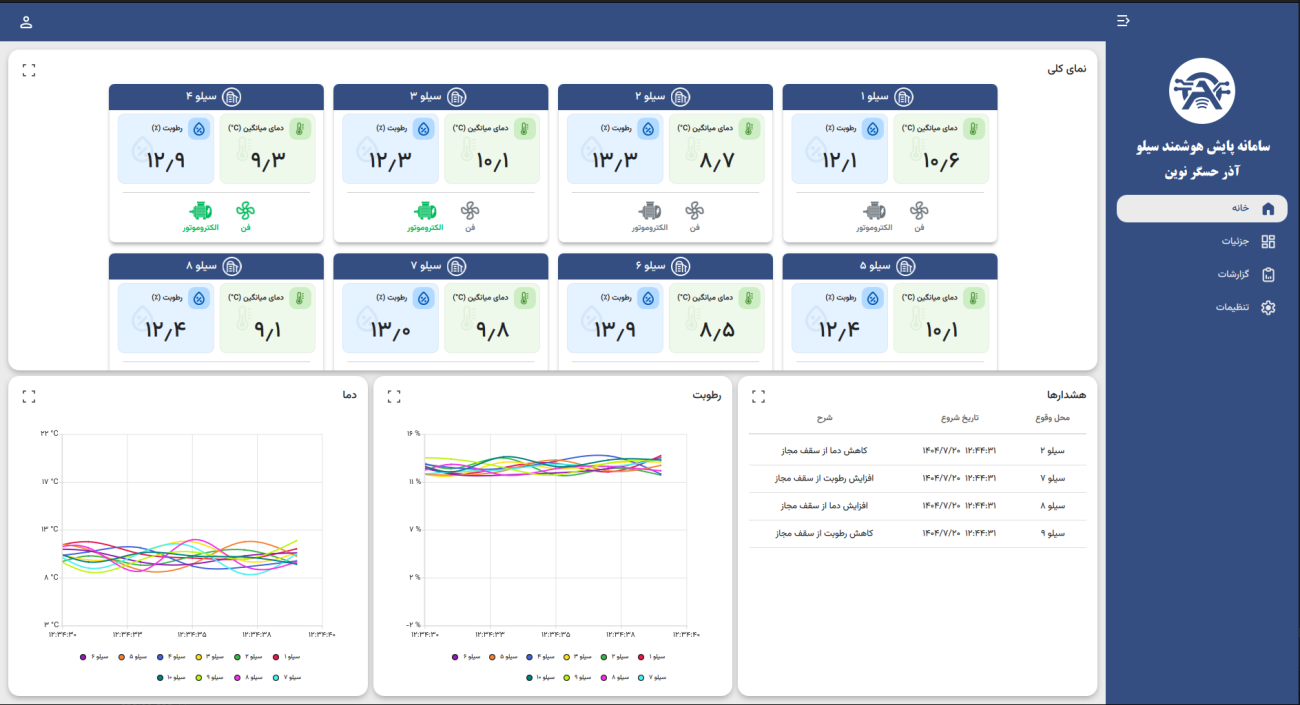
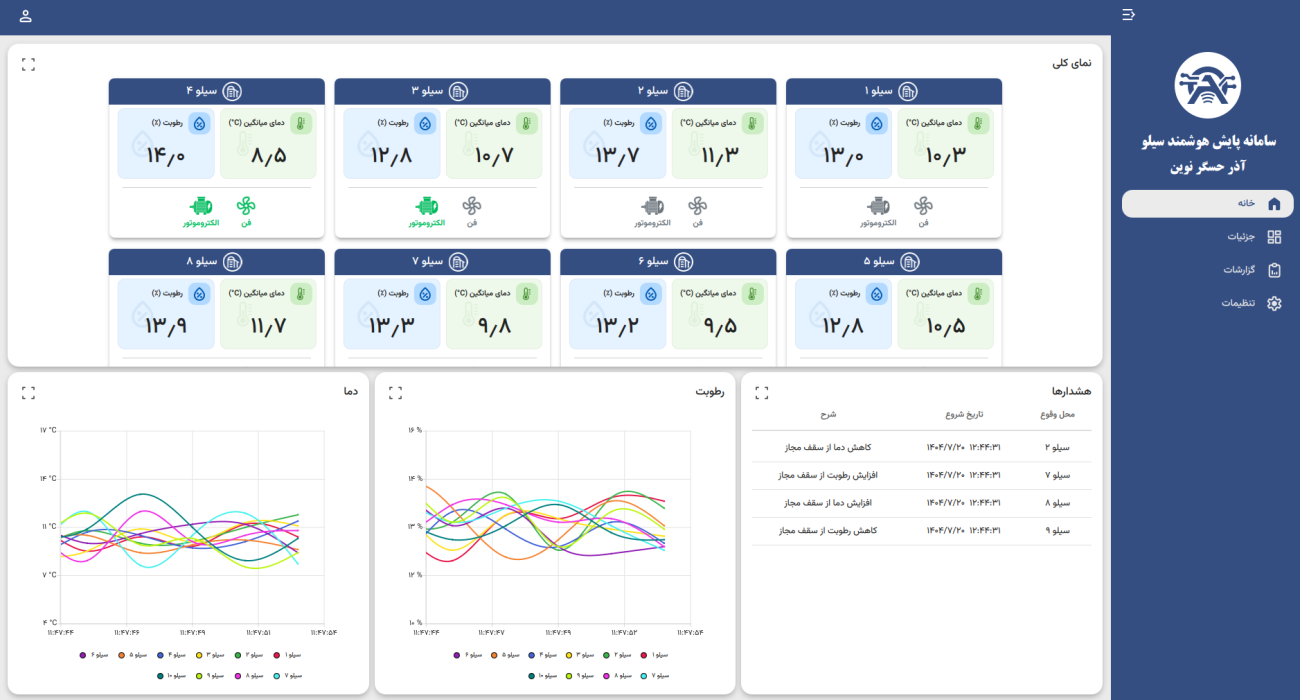
Home Page
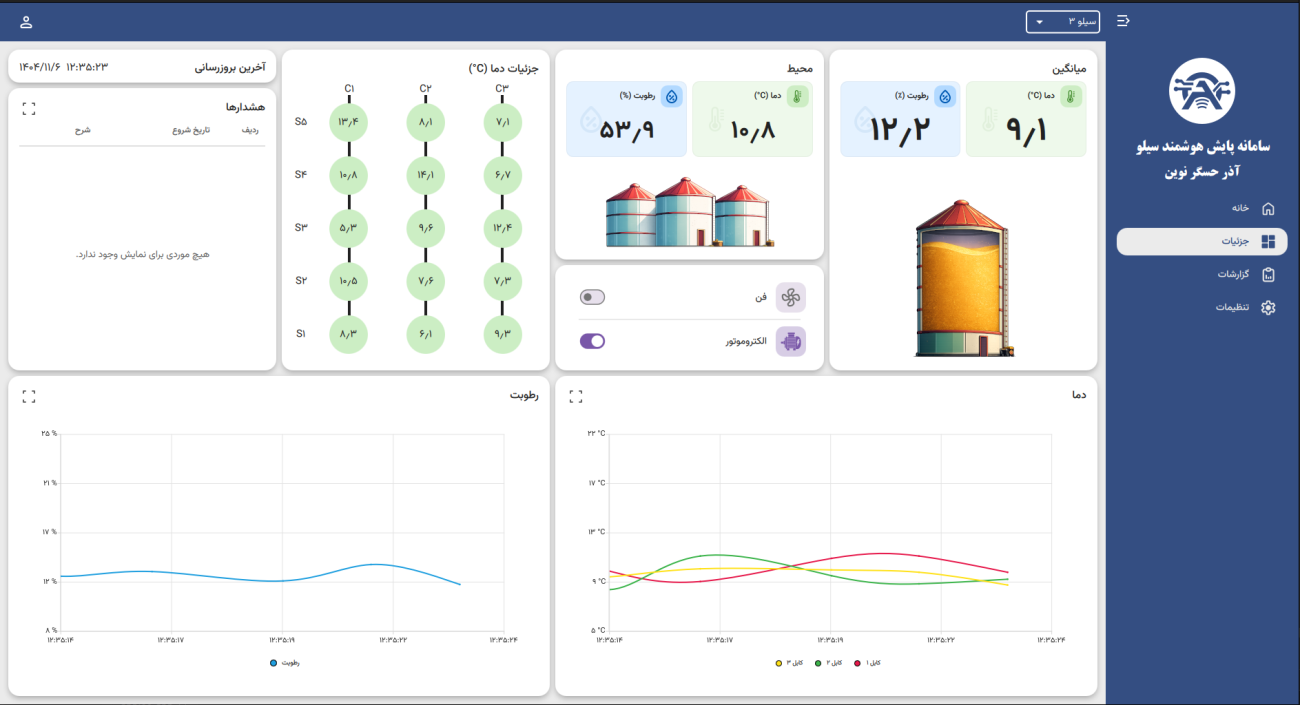
The user can view all information related to each silo in a page-based display format, including high and low limit alarms, material height, remaining material percentage, material weight, weighing status, selected material type, silo measurement, motor operation status, and other related information.
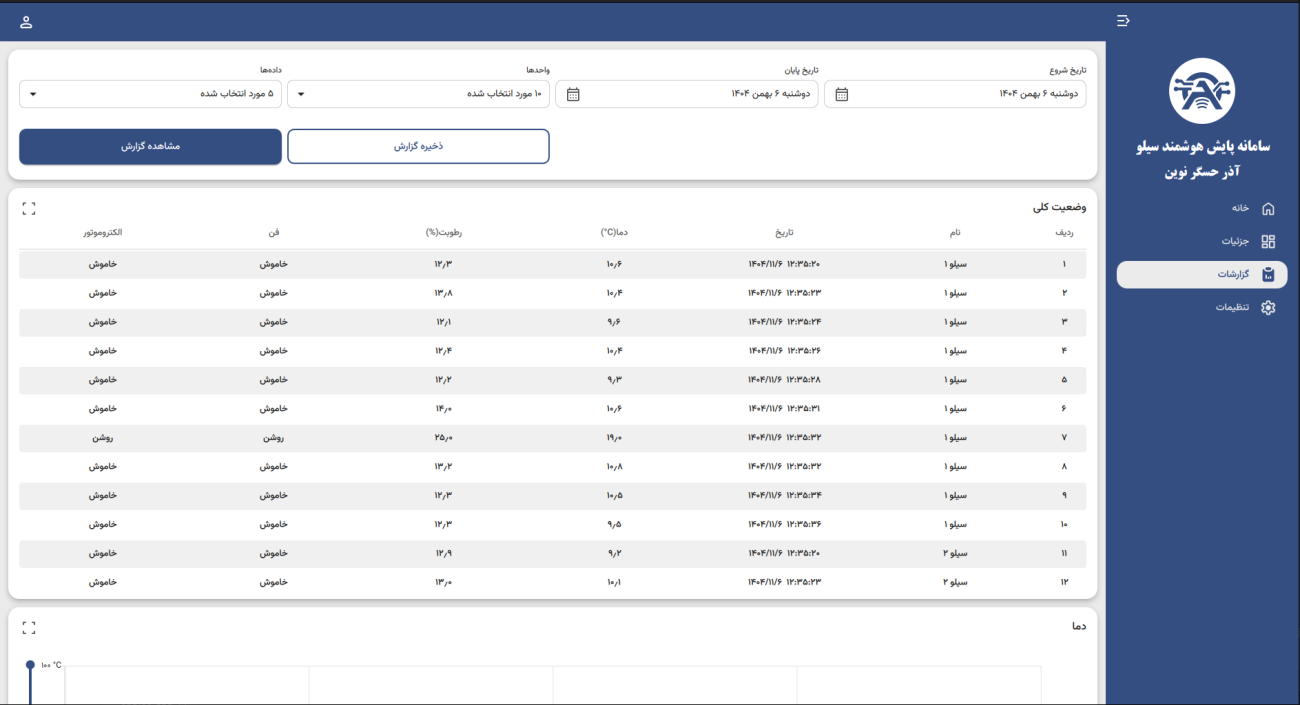
History Charts
The user can view all historical messages (recorded records) and export the data in a standard Excel format, allowing them to analyze and review the information on the Windows operating system.
Material Management
Daily information can be reviewed, and the entry and exit times of materials can be accurately monitored. This system is equipped with an automatic scaling capability and a mouse-over chart interaction feature, allowing users to easily identify and analyze critical points.
Alarm Settings
This feature enables users to send real-time messages to predefined recipients via email, while simultaneously allowing the on-site operator to receive a warning notification window. In critical situations, this capability facilitates fast and effective communication between the operational site and the management center, saving time and improving coordination.
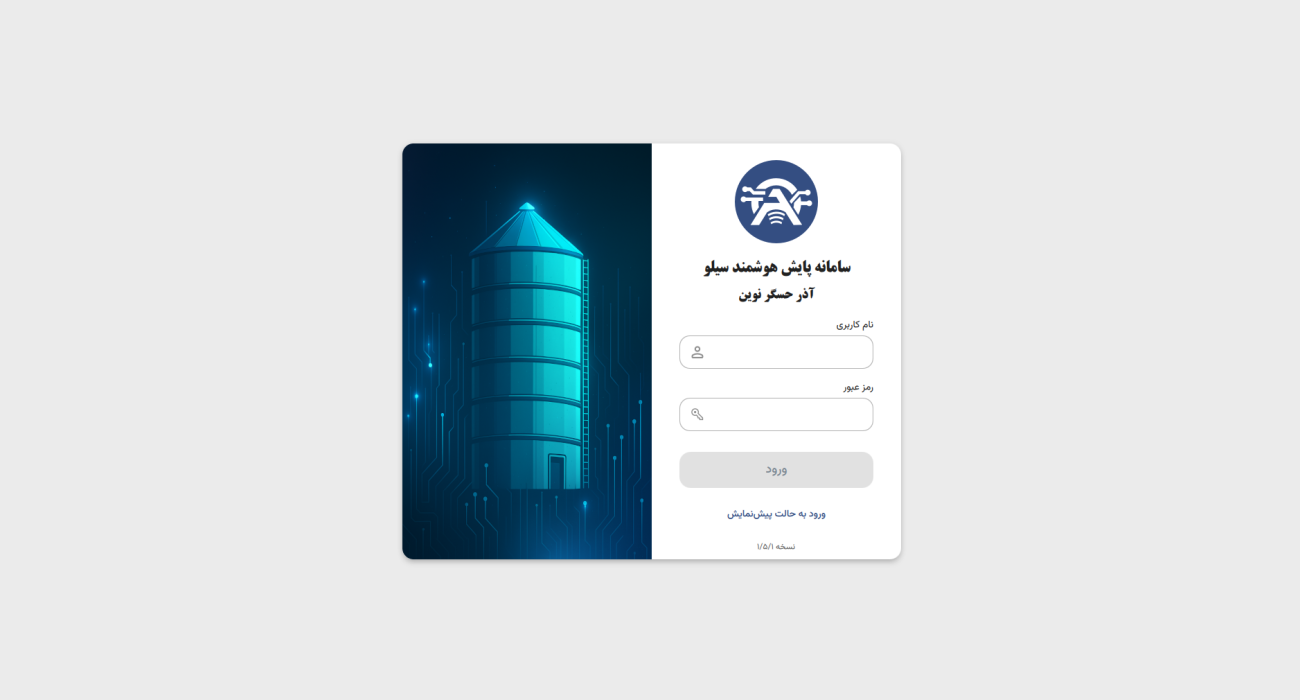
Input and Output Settings
Relay output for level or temperature.
Settings
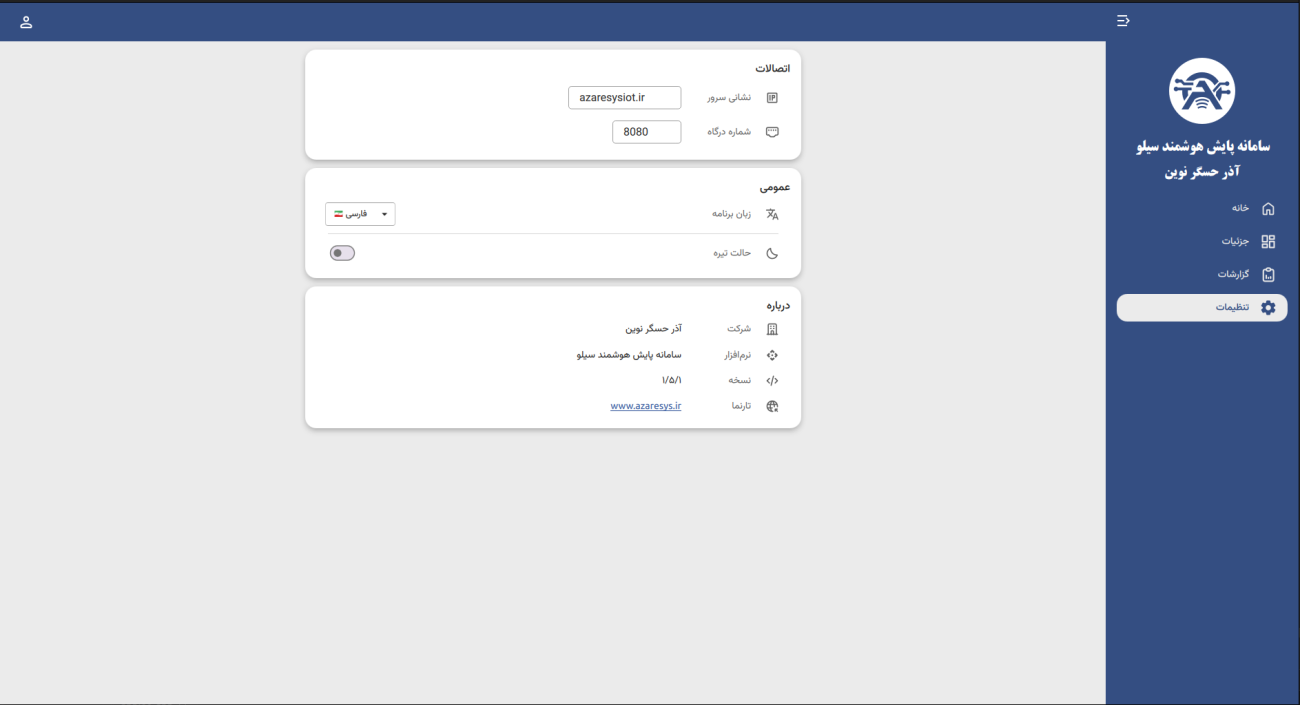
The user can configure the parameters of each device, including: silo number, communication port, product type, model/type, density, and other related settings.
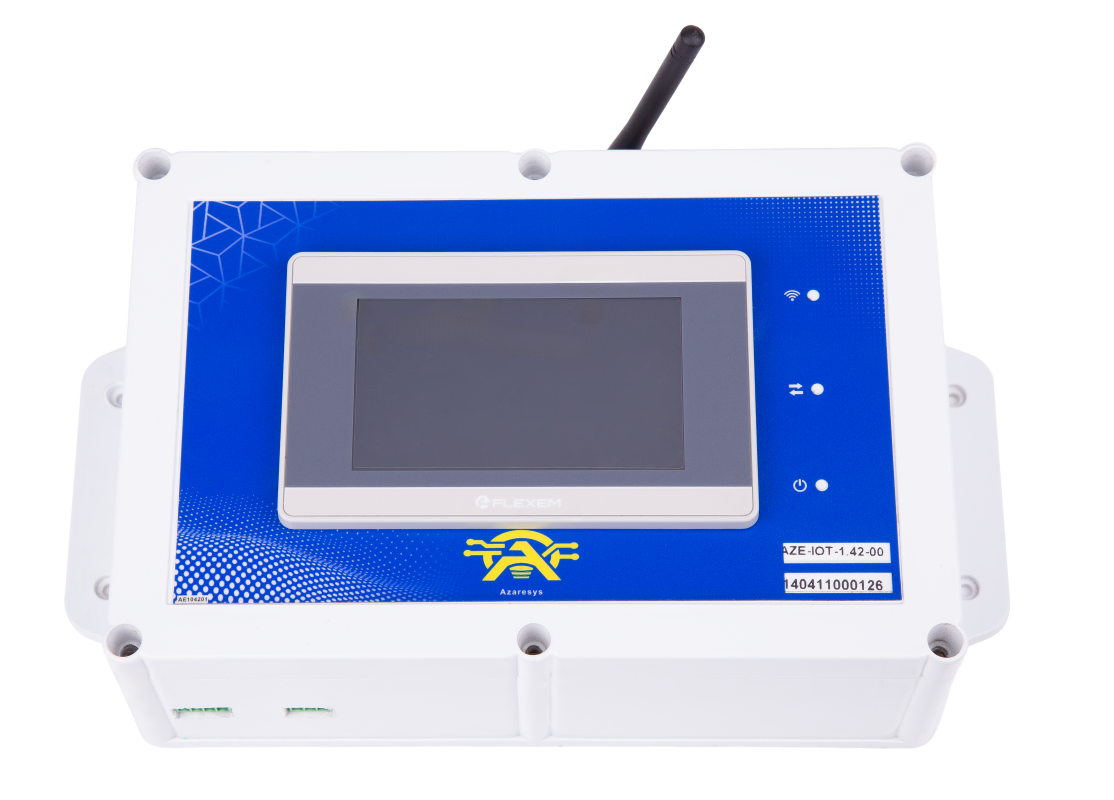
کCentral ControllerIOT 1.4.2

Introduction
The IOT 1.4.2 Central Controller is a powerful, stable, and scalable hardware platform designed for implementing various Internet of Things (IoT) solutions in industrial and semi-industrial environments. By utilizing two independent processors, this system enables simultaneous management of processing, control, data storage, and communication tasks, making it an ideal choice for projects that require reliable and continuous operation.
Its design structure allows it to independently perform monitoring, data logging, and management operations completely offline, without dependence on the Internet or a computer. When connected to a network, it can transfer collected information to the IoT platform.
Supporting communication interfaces such as WiFi, MODBUS-RS485, and USB has transformed this controller into a flexible communication hub for connecting to industrial equipment, PLCs, HMI displays, and other standard hardware available in the market. In addition, the presence of separate memories for storing configurations and recording data in offline mode ensures system security and operational stability.
The modular and expandable design of this controller enables hardware and software customization according to the requirements of each project, making it a reliable solution for advanced monitoring and control systems.
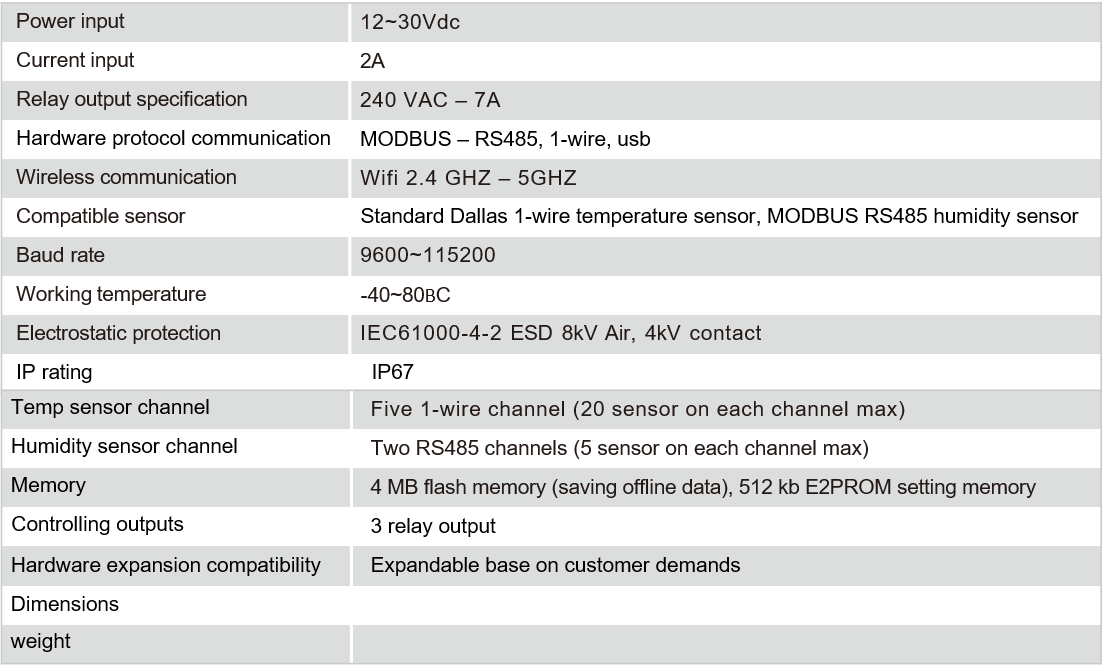
Features
- Dual powerful processors for managing online and offline operations
- 5 × 1-Wire inputs (supporting up to 20 sensors per line)
- 2 separate MODBUS-RS485 communication lines
- 3 relay outputs (7A)
- USB port for data transfer without internet access
- Two separate memories (configuration storage and offline data storage)
- Backup memory for real-time clock and date
- WiFi reset button and Firmware update capability
- Hardware and software expandability according to project requirements

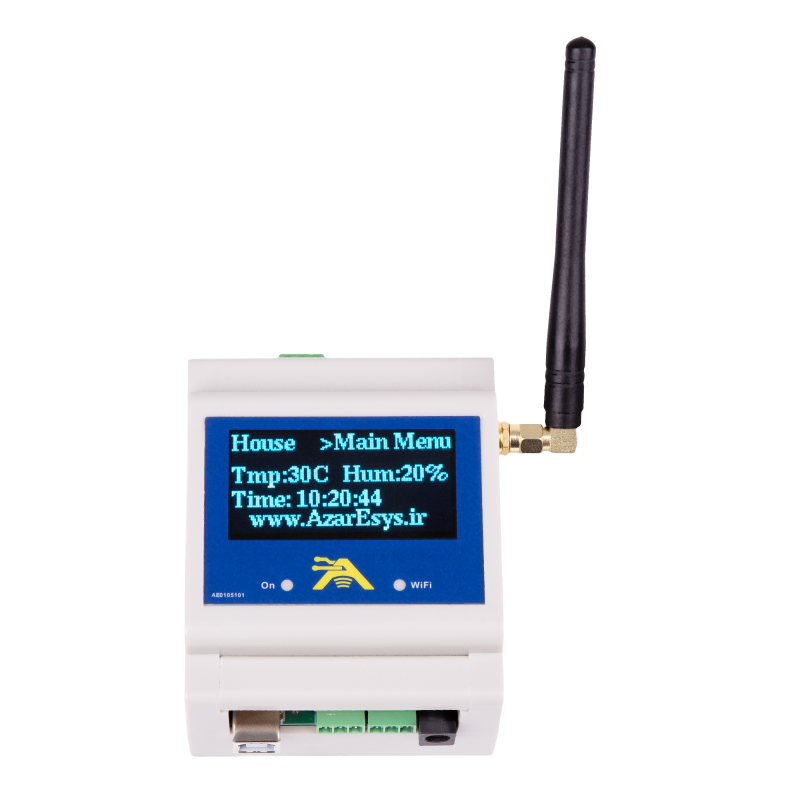
Node / Mesh Controller IOT1.5
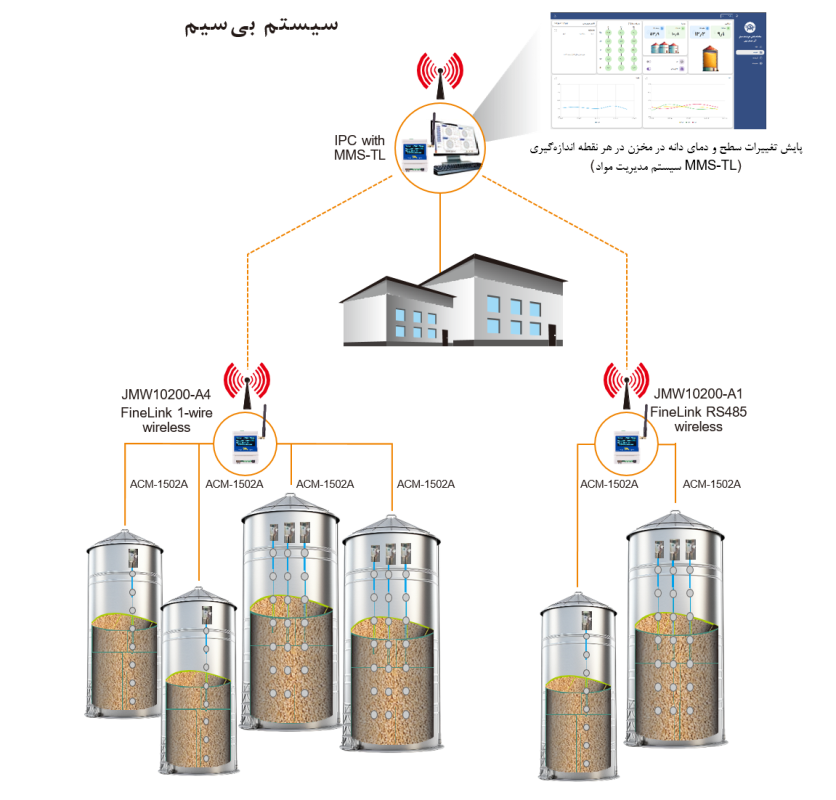
Node or Mesh controllers act as communication interfaces in IoT networks. They are responsible for collecting data from various sensors and devices and transmitting it to the main controller (such as 1.4.2) or directly to the modem. They can also operate as a Gateway. In addition to data transmission and receiving commands from the cloud platform, this system is capable of measuring parameters such as temperature, humidity, and pressure, as well as communicating with devices such as HMI and PLC. In general, models 1.5 and 1.4.2 have similar functionality, and their differences are related to network range, number of supported protocols, input/output capabilities, and processing power. This hardware is available in two versions, with and without a display, and can be expanded according to user requirements.
Features:
- Ability to operate independently or alongside other controllers
- Using the 1-Wire protocol for communication with digital temperature sensors through two separate lines, supporting up to 20 temperature sensors on each line
- Using the MODBUS-RS485 protocol for communication with PLC, HMI, and humidity sensors based on this standard through two separate lines
- Available in two versions: with display and without display
- Hardware and software expandability according to user requirements
- Equipped with a dual-core processor
- Equipped with 2 relay outputs (5A) for controlling electrical devices
- Equipped with WiFi reset / Firmware update button
- Equipped with USB communication for offline configuration and data storage on a computer
- Equipped with Flash memory for storing data during internet outages
- Equipped with E2PROM memory for storing configuration settings
- Built-in real-time clock and calendar memory
- Equipped with two LED indicators in both display and non-display versions
- Equipped with 3 push buttons for manual configuration
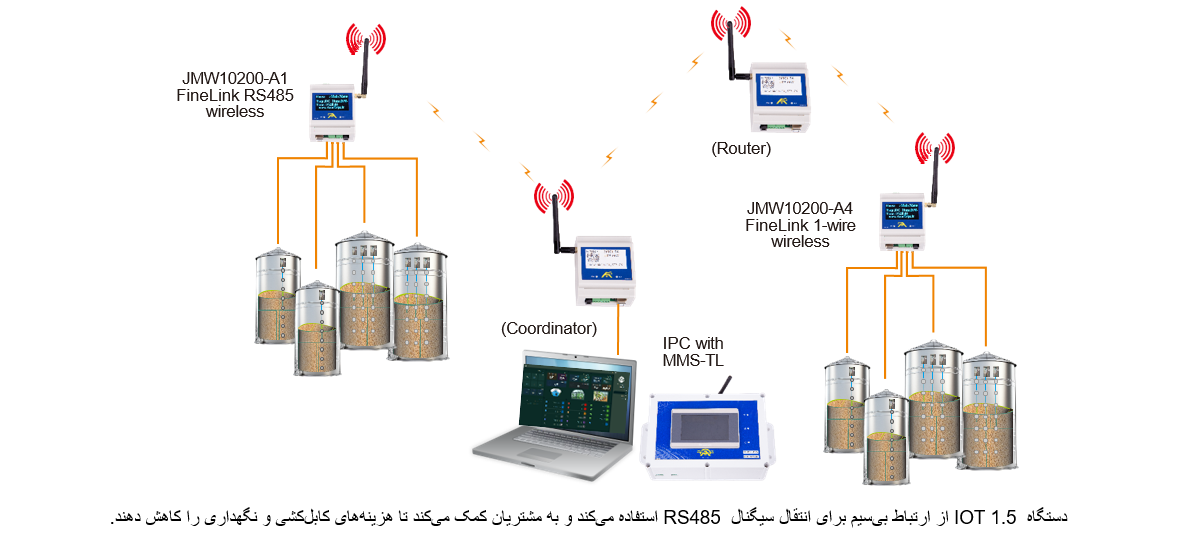
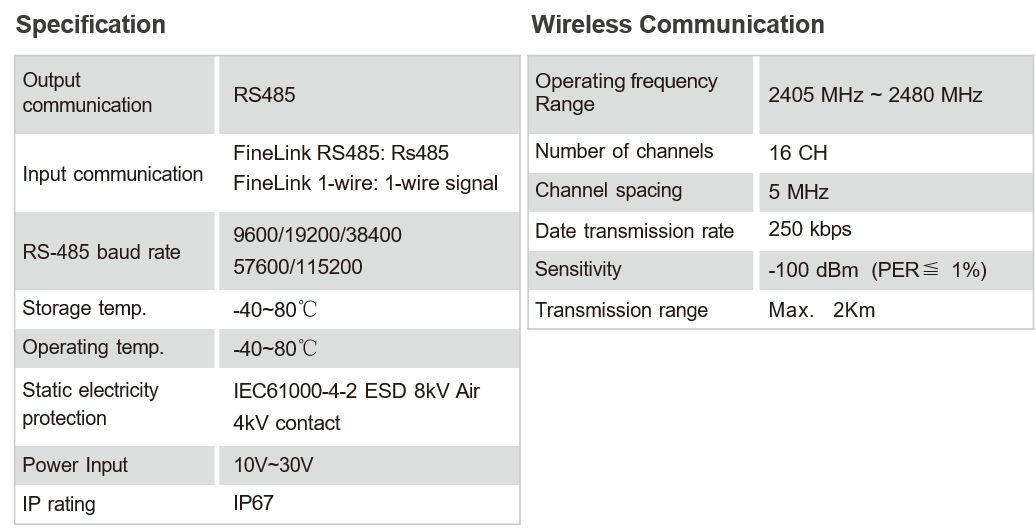
Wireless System Architecture
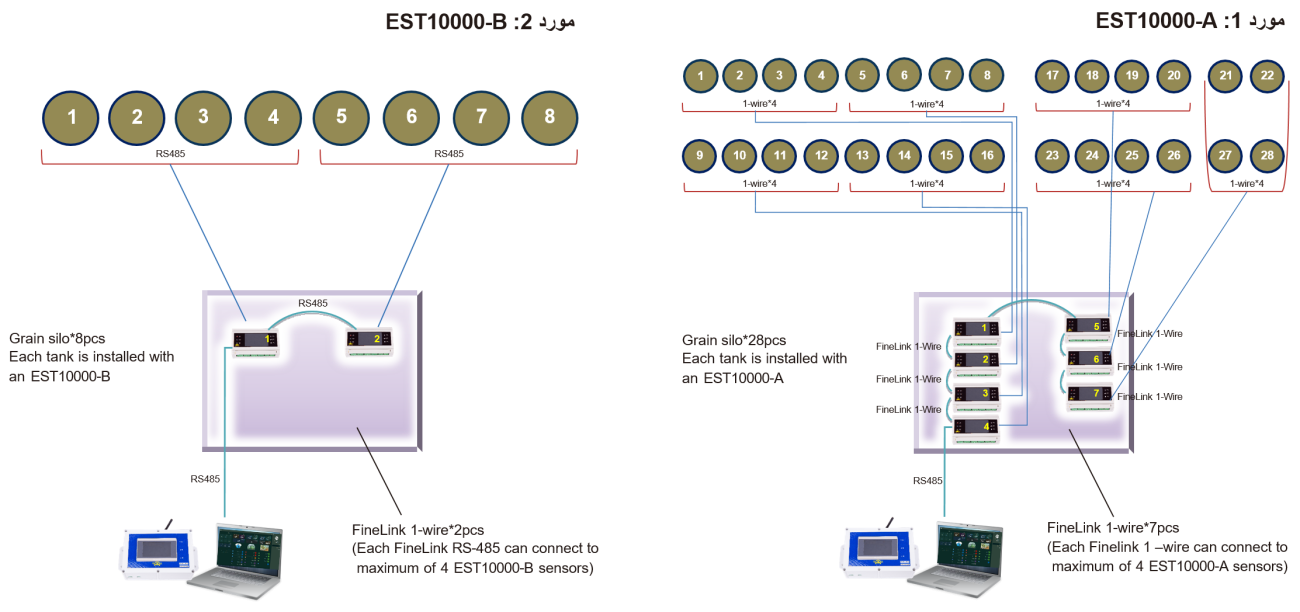
Application Examples
Frequently Asked Questions About Silo Monitoring
Clear answers about sensors, materials, and remote monitoring of silos, tanks, and containers

